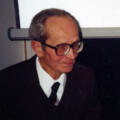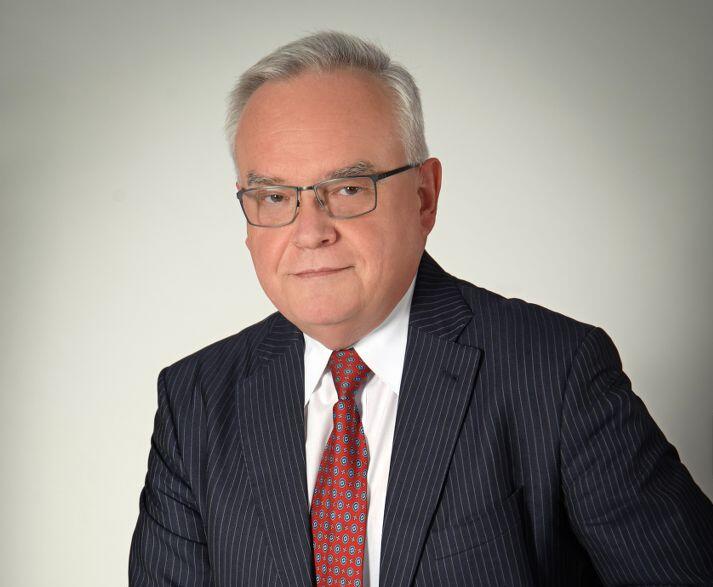
Experimental test pilot.
An employee of the Institute of Aviation in the years 1950–1985. He had been a pilot since the early post-war years. In 1948-1949 he worked as a flight instructor in Krosno. While still a student he was employed at the Institute of Aviation. Initially he conducted certification (type-approval) tests together with Wiktor Pełka (together they performed the first flight of the Junak-3 aircraft). He quickly gained the reputation of being not only practically but also theoretically prepared to make objective assessments of the aircraft being tested and was among the pilots trusted by aircraft designers. He conducted tests of the Junak-3 aircraft, flew the TS-8 Bies and carried out its research tests. On this aircraft he set two international records. Together with Aleksander Wąsowicz he flew the MD-12. In 1955 he completed training on jet aircraft. On 5 February 1960 he performed the first flight of the TS-11 Iskra aircraft. He took part in tests of this aircraft, including flutter tests and engine tests on a flying test bed. Together with Ludwik Natkaniec he flew the experimental Lala-1 aircraft. At the Paris Air Show he demonstrated the TS-8 Bies and M-15 Belfegor aircraft. In 1960 he assumed the position of head of the Flight Testing Department, which was not easy due to his simultaneous duties as a test pilot. Andrzej Abłamowicz was the first operator of the anti-tank guided missile developed at the Institute. He made over 13,000 flights totaling 8,103 hours, on 152 types of aircraft. A heart disease interrupted his work as a test pilot and caused him to retire earlier. He worked voluntarily in the Aeroclub and in the Aviation Section of SIMP. He wrote several manuals for pilots. He intended to write down his aviation experiences, but heart disease and death thwarted those plans..
Sources:
1. „Tu byli tu pracowali” pod redakcją dr hab. inż. Witolda Wiśniowskiego, Warszawa, 2016; (out of stock)
2. „80 lat Instytutu Lotnictwa” J. Grzegorzewski, T. Królikiewicz, Warszawa, 2006; (out of stock)
3. Biblioteka Historyczna nr 11 „Polscy piloci doświadczalni” J. Jędrzejewski, Warszawa, 2014. (out of stock)
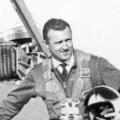
Aircraft design specialist.
An employee of the Institute of Aviation in the years 1979-2002. A specialist in aircraft construction, second chief designer of the I-22 Iryda trainer-combat aircraft in the years 1979-1987. In 1957 he graduated from the Moscow Aviation Institute receiving the degree of Master of Science in Engineering. In the same year he began work at OBR WSK-Mielec, holding various positions, including head of the design department. He took part in the modification of the MiG-17 aircraft (Lim-5M, Lim-6) and in the design of the unrealized M-7 and M-12 aircraft. He was the organizer and head of the Department of High-Power Engine and Fuel Equipment Testing at PZL Mielec. In the years 1972-1979 he was the director of the Research and Development Centre for Rail Vehicles in Poznań. He conducted work on the aerodynamics of rail vehicles. His doctoral dissertation, defended in 1977, concerned this subject.
In 1979 he took up work at the Institute of Aviation as deputy director for design matters and chief designer of the I-22 Iryda trainer-combat aircraft. From 1993 he was the chief designer of the four-seat composite utility aircraft I-23 Manager, which in 2002 obtained certification for compliance with FAR 23 regulations. From 2003 he dealt with the issues of air transport using small aircraft, including the project submitted to the European Commission entitled European Personal Air Transportation System (EPATS). For his participation in the development of the I-22 Iryda aircraft he was awarded, among other distinctions, the Knight’s Cross of the Order of Polonia Restituta in 1986.
Source:
1. „Tu byli tu pracowali” pod redakcją dr hab. inż. Witolda Wiśniowskiego, Warszawa, 2016; (out of stock)
2. „80 lat Instytutu Lotnictwa” J. Grzegorzewski, T. Królikiewicz, Warszawa, 2006; (out of stock)
3. Biblioteka Historyczna nr 4 „Samolot szkolno-bojowy I-22 Iryda. Wymagania, realizacja, ocena” A. Baron, Warszawa, 2010. (out of stock)

Head of the Institute of Aviation Technical Research (IBTL).
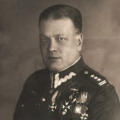
Brigadier General, aerial observer and engineer of the Polish Army, recipient of the Virtuti Militari Order.
He graduated from the Lviv Polytechnic. From 1914 to 1916 he served in the Polish Legions in the 1st Artillery Regiment, and was then sent to the Austrian Officers’ Aviation School, where he fought on the Italian front as an aerial observer. After the Oath Crisis, he was active in the Polish Military Organization.
In November 1918 he took part in the capture of the Lewandówka airfield in Lviv and fought in the defense of the city during the Polish-Ukrainian War. On 5 November 1918, together with Stefan Bastyr, he carried out the first combat flight of a Polish aircraft. He commanded the newly formed 2nd Combat Air Squadron (later the 6th Reconnaissance Squadron).
After the war he held high positions in the command of the Polish Air Force and in the Department of Air Navigation of the Ministry of Military Affairs. He also studied at the Higher Aviation School in Paris. He directed the Central Aviation Works in Warsaw, worked at the Institute of Aviation Technical Research, and commanded the 1st Air Group. In 1935 he became the Deputy Commander of the Air Force for Operations.
After the September Campaign, he was interned in Romania, and later made his way to France and Great Britain. After the war he remained in Scotland, where he died in 1959 in Edinburgh. He was buried at Corstorphine Hill Cemetery.
Specialist in aviation materials and structural engineering.
An employee and scientific consultant of the Institute of Aviation in the years 1945-1985. An outstanding specialist in the field of strength of materials and aircraft structures. During the German occupation, while attending clandestine studies at the Warsaw University of Technology, he obtained a mechanical engineering diploma in 1942. In the years 1941-1944 he took part in the work of the underground Technical Institute of Aviation (code name “Dural”). In the years 1945-1946, together with a group of engineers, he participated in the organization of the Technical Institute of Aviation and was in fact its first director, and subsequently deputy director. In the years 1946-1955 he was head of the Department of Structural Strength and was also one of the initiators of the construction of the SP-GIL helicopter – he performed its strength calculations. He verified the strength calculations of aircraft built in Poland. He defended his doctoral dissertation in 1946. Alongside his work at the Institute of Aviation, he conducted teaching activity at the Wawelberg and Rotwand Engineering School and later at the Warsaw University of Technology, where in 1954 he became an associate professor and in 1962 a full professor. In higher education he held many responsible positions. He supervised many doctoral dissertations. He did not break contact with the Institute of Aviation. In the years 1969-1985 he was a scientific consultant at the Institute, and in the years 1964-1987 a member of the Institute’s Scientific Council. In the Council he took care of the scientific development of the Institute’s staff. His principal achievement was the introduction into the Polish aviation industry of modern methods of strength calculations for thin-walled and truss structures. He was a consultant on structural and strength solutions for many Polish airplanes, helicopters, and gliders. The methods of strength calculations developed for aviation he transferred to other branches of industry. He was the author of many scientific works and academic textbooks. He was characterized by extensive knowledge not only technical but also humanistic. He had an excellent memory, an extraordinary teaching talent, and was a kind mentor who cared about the development of the young engineering staff.
Source:
1. „Tu byli tu pracowali” pod redakcją dr hab. inż. Witolda Wiśniowskiego, Warszawa, 2016; (out of stock)
2. „80 lat Instytutu Lotnictwa” J. Grzegorzewski, T. Królikiewicz, Warszawa, 2006; (out of stock)
3. Biblioteka Historyczna nr 14 „Tytuły, stopnie i stanowiska naukowe pracowników Instytutu Lotnictwa” W. Wiśniowski, Warszawa, 2019. (on sale)
4. Seria „Ludzie lotnictwa – Zbigniew Brzoska”, pod redakcją Lesława Karsta, Warszawa, 2022
Structural engineer and specialist in aircraft strength testing.
Docent, M.Sc., Eng. (1911-1978). An employee of the Institute of Aviation in the years 1948-1976. An outstanding aircraft designer. In 1931, after passing the secondary school leaving examination, he began studies at the Warsaw University of Technology. After obtaining a half-diploma, he began work in 1937 at the Experimental Aviation Workshops (RWD) at Okęcie. He received the degree of Master of Science in Engineering in 1961. He worked on the development of the designs of the RWD-19, RWD-23 and RWD-25 aircraft. In the years 1936-1937 he completed the Artillery Cadet School and in September 1939 he defended the Modlin fortress (5th and 8th Light Artillery Regiments). In 1942 he joined the sabotage unit of the Home Army “Wachlarz”. In the winter of 1945-1946 he prepared a design of the single-seat motor glider Pegaz for a competition of the Ministry of Communications, which won first place. The prototype was built in the workshops of the Polish Scouting Association (ZHP) and the District Aviation Workshops in Warsaw’s Gocław. The first flights were carried out at the Institute of Aviation by B. Żurakowski and J. Szymankiewicz. Tadeusz Chyliński began work at the Institute at the beginning of 1948 (then still the Technical Institute of Aviation – ITL), as a designer in the Strength and Structural Department, where he designed the fuselage and landing gear of the SP-GIL helicopter. From 1951 he was head of the Strength Department of the Institute of Aviation. Under his leadership many static tests of licensed and domestically designed aircraft were carried out. From 1964 he was head of the Special Constructions Department and later of an independent problem-oriented group. He was the author or co-author of designs of free-flying targets (TC-1, TC-2), towed targets, and experimental targets (Spec); the author of a project to convert the Piper L-4 aircraft into an air ambulance version (14 examples were built); and of unrealized aircraft projects – a modernization of the An-2, the Borsuk transport aircraft, and the Kawka glider. He retired in 1976.
Source:
1. „Tu byli tu pracowali” pod redakcją dr hab. inż. Witolda Wiśniowskiego, Warszawa, 2016; (out of stock)
2. „80 lat Instytutu Lotnictwa” J. Grzegorzewski, T. Królikiewicz, Warszawa, 2006; (out of stock)
3. Biblioteka Historyczna nr 14 „Tytuły, stopnie i stanowiska naukowe pracowników Instytutu Lotnictwa” W. Wiśniowski, Warszawa, 2019; (on sale)
4. „Moja pasja lotnictwo” R. Chyliński, Warszawa, 2017.
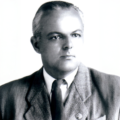
An employee of the Institute of Aviation in the years 1930-1939 and 1946-1959. An outstanding aircraft designer and academic teacher. In 1925 he graduated from the Stefan Batory Gymnasium in Warsaw, obtaining his secondary school leaving certificate. In the years 1920-1926 he belonged to the Polish Scouting Association. After passing the secondary school leaving examination, he began studies at the Faculty of Mechanical Engineering of the Warsaw University of Technology, which he completed in July 1931. In May 1930 he started professional work as a flight-measurement technician in the Airframe Department at the Institute of Aviation Technical Research (today’s Institute of Aviation). At the same time he took the position of head of the Calculation Department at DWL and the position of senior assistant at the Chair of Aircraft Design and Flight Mechanics at the Warsaw University of Technology. He also cooperated with the RWD design office, where he headed the section for aerodynamic and strength calculations. In the post-war years he worked simultaneously at the Institute of Aviation Technical Research and at the Central Aircraft Study, where, in cooperation with Prof. F. Misztal, he developed prototypes of the CSS-11 and CSS-12 aircraft. At the design office of the Institute of Aviation, together with Prof. Misztal, he developed the MD-12 passenger aircraft. In 1958 he received the title of professor. At the Chair of Aircraft Design headed by Prof. Misztal he led the Airframe Technology Department, where he initiated, as the first in the country, research on aircraft structures made of polymer composites and established cooperation in this field with the aviation industry. In 1970 he was a co-organizer of the Institute of Aeronautical Engineering and Hydroaerodynamics at the Faculty of Power and Aeronautical Engineering of the Warsaw University of Technology and its first director. In the years 1960-1961 he held the position of dean of the Faculty of Aviation at the Warsaw University of Technology; in 1969 he was vice-dean of the Faculty of Power and Aeronautical Engineering; and in 1970 he became head of the Department of Airplanes and Helicopters. In 1977 he retired, but continued to cooperate with the Department of Airplanes and Helicopters. He was also a consultant on ultralight gliders made of polymer composites. He died on 17 February 1987. He was buried at the Powązki Cemetery in Warsaw.
Source:
1. Biblioteka Historyczna nr 6 „Wybrane zagadnienia z historii Instytutu Lotnictwa” T. Królikiewicz, Warszawa, 2012; (on sale)
2. Biblioteka Historyczna nr 14 „Tytuły, stopnie i stanowiska naukowe pracowników Instytutu Lotnictwa” W. Wiśniowski, Warszawa, 2019. (on sale)
Aircraft engine specialist.
An employee of the Institute of Aviation in the years 1956-2001. A specialist in the field of the design and construction of aircraft engines. He graduated from the Warsaw University of Technology in 1956, obtaining the degree of Master of Science in Engineering in the specialization of aircraft engine construction. On 1 April 1956 he began work at the Institute of Aviation in the Aircraft Engines Department. In 1961 he became an assistant professor, and in 1978 he obtained first-degree professional specialization in the field of aircraft engine design. From July 1964 he headed design teams responsible for the refinement and development of the SO-1 engine. Under his leadership the K-15 jet engine was developed at the Institute of Aviation (in December 1979 he was appointed chief designer of this engine). From 1989 until his retirement he was the chief designer of turbine engines at the Institute of Aviation. During this period, under his leadership, the K-15 engine was developed and introduced into production (used to power the I-22 Iryda trainer-combat aircraft), its developmental version K-16 was developed, as well as the D-18 turbofan engine, and a research project of the State Committee for Scientific Research concerning thrust vectoring was conducted. He was a member of the Scientific Council of the Institute of Aviation for several terms and the author of several dozen articles, opinions, reports, and programs concerning turbine engines, piston engines, and rotary-piston machines. He was the author of 9 patents.
Source:
1. „Tu byli tu pracowali” pod redakcją dr hab. inż. Witolda Wiśniowskiego, Warszawa, 2016; (out of stock)
2. „80 lat Instytutu Lotnictwa” J. Grzegorzewski, T. Królikiewicz, Warszawa, 2006; (out of stock)
3. Biblioteka Historyczna nr 4 „Samolot szkolno-bojowy I-22 Iryda. Wymagania, realizacja, ocena” A. Baron, Warszawa, 2010. (out of stock)
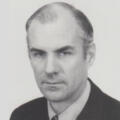
Director and scientific leader of the Institute.
An employee of the Institute of Aviation in the years 1946-1974, its director in the years 1946-1948. An outstanding specialist, the founder of the Polish school of flight mechanics and aeroelasticity, as well as the mechanics of rarefied gases. He was born on 12 June 1912 in Volhynia. In 1935 he graduated from the École Nationale Supérieure d’Aéronautique (ENSA) in Paris and also studied at the Université de Paris. Until the outbreak of the war he worked at the Lublin Aircraft Factory, from where he was evacuated to France, and after its capitulation he settled in Great Britain, where he was employed at the ground personnel training centre of the Polish Air Force in Blackpool, and from December 1941 at the Royal Aircraft Establishment in Farnborough. In 1943 he obtained a pilot’s license. In 1946 he returned to Poland and began work at the Technical Institute of Aviation as its director. He developed the post-war strategy of the Institute of Aviation, including, among other things, the creation and development of turbine engines for training aircraft. He took scientific care of the Institute’s staff, was the supervisor of five doctoral dissertations and for many years a patron of scientific development. He later took up work in higher education and at the Polish Academy of Sciences. During his work at the Institute of Aviation he defended his doctoral dissertation entitled Application of the harmonic compliance method to the calculation of amplitudes of forced vibrations of an aircraft taking into account the influence of internal damping. He was a full member of the Polish Academy of Sciences. He was a professor at the Warsaw University of Technology (1947-1970), organizer and head of the Chair of Flight Mechanics at the Faculty of Aviation, vice-dean of the Faculty of Aviation, and the first dean of the Faculty of Power and Aeronautical Engineering (1960-1963). From 1970 he was a professor at the University of Warsaw, director of the Institute of Mechanics of the University of Warsaw (1977-1981), and later vice-rector for science. For many years he was the head of the Department of Fluid and Gas Mechanics at the Institute of Fundamental Technological Research of the Polish Academy of Sciences. Among the professor’s publications, special attention should be paid to the extensive three-volume academic textbook Flight Mechanics (PWN, 1952) and its new two-volume edition (1961), as well as Introduction to Aeroelasticity, probably the first academic textbook in the world in the field of aeroelasticity. He died on 25 October 2004. He was buried at the Powązki Cemetery in Warsaw.
Source:
1. „Tu byli tu pracowali” pod redakcją dr hab. inż. Witolda Wiśniowskiego, Warszawa, 2016; (out of stock)
2. „80 lat Instytutu Lotnictwa” J. Grzegorzewski, T. Królikiewicz, Warszawa, 2006; (out of stock)
3. Biblioteka Historyczna nr 14 „Tytuły, stopnie i stanowiska naukowe pracowników Instytutu Lotnictwa” W. Wiśniowski, Warszawa, 2019. (on sale)
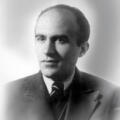
An employee of the Institute of Aviation in the years 1956-2000. A specialist in the field of the design and construction of aircraft engines, an aviation historian, and a publicist. He received the degree of Master of Science in Engineering in 1956 from the Faculty of Aviation of the Warsaw University of Technology, specializing in aircraft engines, and in the same year he began work at the Institute of Aviation. During 44 years of work he served as head of the combustion chambers laboratory, head of the Branch Technical and Economic Information Centre (twice), chief specialist for scientific and technical cooperation, and deputy director of the Institute for coordination. From 1962 he was an assistant professor. In the years 1964-1976 he was chairman of the Editorial Board of the bimonthly Information Bulletin of the Institute of Aviation. In 1976 he completed the Postgraduate Study Program in the Organization and Coordination of Scientific Research at the Warsaw University of Technology. In the years 1976-1978 he was deputy head of the so-called “Key Problem 05.06” (diesel engines), and in the years 1976-1979 he was a member of the coordination team of “Key Problem 12.05” (aviation). For 20 years he was chairman of the Standardization Commission at the Institute of Aviation. He was awarded the Gold Cross of Merit. In 2000 he retired. His achievements include more than 500 popular-science and scientific articles as well as a number of books and thematic booklets in the series Types of Arms and Armament. He died in Warsaw in 2020.
Source:
1. „Tu byli tu pracowali” pod redakcją dr hab. inż. Witolda Wiśniowskiego, Warszawa, 2016; (out of stock)
2. „80 lat Instytutu Lotnictwa” J. Grzegorzewski, T. Królikiewicz, Warszawa, 2006. (out of stock)
An employee of the Institute of Aviation in the years 1930-1939 and 1947-1964. A specialist in the field of strength calculations of aircraft structures and an outstanding balloon pilot. Franciszek Janik was born on 7 July 1900 in Mszanka near Gorlice, where he began his education in a primary school, and later attended the gymnasium in Gorlice. During the First World War, as a fourteen-year-old boy, he saw an “Albatros” aircraft flying overhead. From that moment he became fascinated with aviation. In June 1919 he passed his secondary school leaving examination and began studies at the Faculty of Mechanical Engineering of the Lviv University of Technology, where he designed aircraft and learned glider piloting, while simultaneously mastering all disciplines of air sports. In 1927 he passed his diploma examination and the Council of the Faculty of Mechanical Engineering of the Lviv University of Technology, at the request of the examination commission, granted Franciszek Janik the academic degree of mechanical engineer. He remained at the university as a senior assistant to Prof. Maksymilian Huber, and later to Dr. Eng. Zygmunt Fuchs, in the Aerodynamics Laboratory of the Lviv University of Technology. He supervised the construction of a wind tunnel for scientific research. His scientific abilities attracted the attention of outstanding designers of armored weapons, as a result of which he was transferred to the Armored Weapons Design Office of the Institute of Engineering Research in Warsaw, where, together with a team consisting of Maj. Eng. Władysław Trzeciak, Capt. Edward Karkoz and Eng. Edward Habich, he worked on the design of the light high-speed tank model 30. Engineer Franciszek Janik dealt with the propulsion solutions for this tank. In 1930 the director of the Institute of Aviation Technical Research employed Franciszek Janik as head of the Airframe Department, whose task was to verify and modernize the calculations of aircraft and glider prototypes and to conduct statistical tests. In 1933 he became a pilot, completing airplane training at the Warsaw Aeroclub. In 1932, at the Infantry Reserve Officer Cadet School in Zambrów, he completed an eight-week course for reserve non-commissioned officers. In 1936, due to very good results in aviation training, he was transferred from the corps of infantry reserve officers to the corps of air force reserve officers. In 1937, in his scientific work entitled Required Strength of an Aircraft, Franciszek Janik described the theory of the “pull-out curve” (maneuver load curve), which after the war was introduced into the international regulations of the International Civil Aviation Organization (ICAO – the international organization of civil aviation). In 1938, together with Capt. Antoni Janusz, he won the Gordon Bennett Cup in balloon competitions in Belgium. In September 1939 he was evacuated together with Airframe Factory No. 1 of the State Aviation Works (PZL WP-1) from Paluch to Romania, and from there, through Yugoslavia, he made his way to France. There he was admitted to the Polish Army and assigned to the Air Force Officers’ Battalion in Lyon-Bron as a lecturer in the subjects of airframe construction and aerodynamics. During the Second World War he stayed in Paris and Ankara, conducting design work in aircraft factories and training students, engineers, and aviators. After the end of the war he returned to Poland and took up work at the Institute of Aviation and simultaneously at the Warsaw University of Technology. He worked as a lecturer in aviation theory, a designer, and also prepared aviation expert reports. He published many scientific works, books, textbooks, and scripts. In addition to his scientific activity he was also an active pilot and parachutist. He died in Warsaw on 27 December 1975.
Source:
1. „Tu byli tu pracowali” pod redakcją dr hab. inż. Witolda Wiśniowskiego, Warszawa, 2016; (out of stock)
2. „80 lat Instytutu Lotnictwa” J. Grzegorzewski, T. Królikiewicz, Warszawa, 2006. (out of stock)
3. Biblioteka Historyczna nr 14 „Tytuły, stopnie i stanowiska naukowe pracowników Instytutu Lotnictwa” W. Wiśniowski, Warszawa, 2019, (on sale)
4. Seria „Ludzie lotnictwa – Franciszek Janik”, pod redakcją Lesława Karsta, Warszawa, 2021.
An employee of the Institute of Aviation in the years 1966-2009. A specialist in the field of aerodynamics of airfoils and wings. He defended his doctoral dissertation entitled “Research on the compressible two-dimensional flow around a wing” in 1981. He was employed at the Institute of Aviation in the Aerodynamics Department from 1966. In the years 1976–1986 he headed the High-Speed Laboratory. From 1988 he held the position of head of the Aerodynamics Department. In the 1980s he directed research work in the field of aerodynamics of the I-22 Iryda trainer-combat aircraft. Under his leadership a modern aerodynamic technology of the supercritical wing was developed. At the beginning of the 1990s this technology was used in the projects of the developmental version of the I-22 Iryda aircraft and the Kobra 2000 attack aircraft. Many of his solutions were applied in new aviation designs, among others in the I-23 Manager aircraft and the IS-2 helicopter. He designed a family of ILH-3XX main rotor airfoils and the ILT-212 airfoil of the helicopter tail rotor. In the years 1995-1997, under his leadership, an extensive aerodynamic modernization of the I-22 Iryda aircraft to the M-96 version was carried out, with increased maneuvering capability and improved take-off and landing parameters. In the years 1998-1999 he led research work for the aviation corporation Northrop Grumman Corporation. In 2000 he established cooperation with aviation research centers in Europe, which led to the participation of the Aerodynamics Department in the European Framework Programs and in commercial development work for the Airbus A400M project. Under his leadership the Aerodynamics Department took part in six research projects of the 5th and 6th Framework Programs: HELIX, HiReT, UAVNET, HISAC, UFAST and CESAR. For three terms he was a member of the Scientific Council of the Institute of Aviation, and since 1987 a member of the Fluid Mechanics Section of the Committee on Mechanics of the Polish Academy of Sciences.
Source:
1. „Tu byli tu pracowali” pod redakcją dr hab. inż. Witolda Wiśniowskiego, Warszawa, 2016; (out of stock)
2. „80 lat Instytutu Lotnictwa” J. Grzegorzewski, T. Królikiewicz, Warszawa, 2006. (out of stock)
3. Biblioteka Historyczna nr 14 „Tytuły, stopnie i stanowiska naukowe pracowników Instytutu Lotnictwa” W. Wiśniowski, Warszawa, 2019, (on sale)
An employee of the Institute of Aviation in the years 1954-1963. An outstanding designer of gliders and aircraft, a glider and airplane pilot. After receiving her secondary school leaving certificate she began studies at the Warsaw University of Technology. She studied at the Faculty of Mechanical Engineering. She was a glider pilot. On 28 September 1941 she completed clandestine studies at the Warsaw University of Technology, receiving the diploma of engineer. She took part in the Warsaw Uprising. In September 1944 she was deported to a labor camp in Germany. She returned to Poland in May 1945. In May 1946 she completed a course for glider instructors and subsequently a course for airplane pilots. In the same year she began work at the Gliding Institute in Bielsko-Biała as an aircraft designer. In December 1946 she became a member of the Bielsko Aeroclub. She collaborated on the design of the IS-2 Mucha and IS-5 Kaczka gliders and later Mucha-bis. In May 1950 she obtained the Silver Gliding Badge. While participating in the Star Rally of Airplanes she achieved 5th place. Her knowledge made it possible to introduce improvements to the developing “Mucha ter” glider. In 1951 she prepared the preliminary design of the SZD-9 Bocian glider and also took part in the development of the SZD-8 Jaskółka glider. In 1952 she took 2nd place in the Regional Gliding Championships. In 1953 she prepared the preliminary design of the SZD-10 Czapla glider. In the first half of 1954 she prepared the preliminary design and the detailed aerodynamic design of the tailless glider SZD-13X Wampir. In 1954 she was head of the Prototype Section at the Glider Experimental Works. In the years 1953-1954 she chaired the section of the Association of Polish Mechanical Engineers and was vice-chairwoman of the circle of the Supreme Technical Organization in Bielsko-Biała. On 1 October 1954 she was employed as a senior assistant in the Strength Department of the Institute of Aviation in Warsaw. In March 1956 she received an award for the Wróbel training glider. In the same year she obtained a 2nd class airplane pilot license. In March 1957 she became a member of the Warsaw Aeroclub. On 1 September 1957 she received the academic title of assistant professor at the Institute of Aviation. In December 1957 she became a member of the Main Board of the Aeroclub of the Polish People’s Republic. She competed in the Polish Airplane Championships. In January 1963 she obtained the rank of independent research worker. She flew as a glider and airplane pilot. She was passionate about aerobatics. Among other roles, she served on the Audit Commission of the Aeroclub of the Polish People’s Republic, the aviation examination commission, the judging commission at glider and airplane competitions, and the Aviation Experts Commission of the Council for Mutual Economic Assistance. She was an aviation expert of the Commission for Aviation Equipment Regulations at the Department of Civil Aviation of the Ministry of Communications. She died on 2 October 1963 after colliding in the air with another aircraft during night flights at the Warsaw Aeroclub at the Gocław airfield. She was posthumously awarded the Knight’s Cross of the Order of Polonia Restituta.
Source:
1. Biblioteka Historyczna nr 14 „Tytuły, stopnie i stanowiska naukowe pracowników Instytutu Lotnictwa” W. Wiśniowski, Warszawa, 2019; (on sale)
2. Strona „Niebieska Eskadra”: https://niebieskaeskadra.pl/m/?control=8&id=4881&title=irena-kaniewska (dostęp 03.02.2026), autor Konrad Rydołowski.
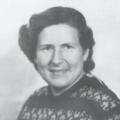
An employee of the Institute of Aviation in the years 1964–1991. An aircraft designer and specialist in the field of aircraft and helicopter economics.Before the war, he graduated from the Air Force Cadet School in the technical group. He fought in the Polesie Independent Operational Group until the capitulation at Kock. In 1941–1944 he was a student at the clandestine Warsaw University of Technology. He took part in the Warsaw Uprising. He obtained his Master of Science in Engineering degree in 1946 at the Polytechnic Faculties of AGH University of Science and Technology in Kraków. He began work at the Gliding Institute in Bielsko as a senior designer (simultaneously giving lectures on aerodynamics at the Polytechnic Faculties in Kraków), and from 1954 he worked as head of the design office. He developed the designs of the Jaskółka (sport) and Kaczka (experimental) gliders. In the years 1958–1964 he worked at WSK Mielec, serving as head of the Aircraft Design Center. In 1964 he was transferred to the Institute of Aviation. He received the academic title of assistant professor, in 1971 became an associate professor, and in 1979 defended his doctoral dissertation at the Warsaw University of Technology. At the Institute he carried out various study and advisory works in the fields of aerodynamics, structural strength, and performance of aircraft. He developed a method for evaluating the efficiency and economics of agricultural and transport airplanes and helicopters. From 1978 until his retirement he was head of the Branch Center for Scientific, Technical, and Economic Information. For many years he was president of the Aviation Section of the Association of Polish Mechanical Engineers (SIMP). He was awarded the Commander’s Cross of the Order of Polonia Restituta in 2001.
Source:
1. „Tu byli tu pracowali” pod redakcją dr hab. inż. Witolda Wiśniowskiego, Warszawa, 2016; (out of stock)
2. „80 lat Instytutu Lotnictwa” J. Grzegorzewski, T. Królikiewicz, Warszawa, 2006; (out of stock)
3. Biblioteka Historyczna nr 14 „Tytuły, stopnie i stanowiska naukowe pracowników Instytutu Lotnictwa” W. Wiśniowski, Warszawa, 2019; (on sale)
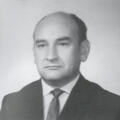
An employee of the Institute of Aviation in the years 1955–1998. A specialist in avionics and electronic equipment of aircraft. He obtained his Master of Science in Engineering degree at the Silesian University of Technology, Faculty of Electrical Engineering, in 1951. Until 1955 he worked at WSK-Mielec as a designer responsible for the electronic equipment of the Lim family of aircraft. In 1955 he was transferred to the Institute of Aviation, where he worked until retirement in 1998 in positions including assistant professor, head of the Aviation Radio Engineering Laboratory, and head of the Avionics Department. He was engaged in the development and testing of aircraft radio-navigation equipment and their antennas. He developed the design of the radio-electronic systems for the I-22 Iryda aircraft. In 1979 he assumed leadership of the work on the avionics systems of this aircraft and their implementation, serving as deputy chief designer. He initiated and participated in the development of the RS-6106 military radio station, which was introduced into production at the “Unimor” plant. At the turn of the 1980s and 1990s he directed the development of the diagnostic system and avionics equipment for the developmental versions of the I-22 Iryda aircraft. He published 27 scientific and technical papers, several of which he presented at international conferences. In the years 1986–1990 he lectured on onboard computer systems at the Warsaw University of Technology.
Source:
1. „Tu byli tu pracowali” pod redakcją dr hab. inż. Witolda Wiśniowskiego, Warszawa, 2016; (out of stock)
2. „80 lat Instytutu Lotnictwa” J. Grzegorzewski, T. Królikiewicz, Warszawa, 2006; (out of stock)
3. Biblioteka Historyczna nr 14 „Tytuły, stopnie i stanowiska naukowe pracowników Instytutu Lotnictwa” W. Wiśniowski, Warszawa, 2019. (on sale)
An employee of the Institute of Aviation in the years 1948–1990. A specialist in flight testing and flight mechanics, and an aircraft designer. During the war he was involved in underground activities. During the Warsaw Uprising, he participated in weapons production. After the uprising, he was held in a prisoner-of-war camp. After liberation, he worked as an instructor for the professional retraining of demobilized soldiers of the Polish 131 Wing. He studied at the Polish University College in London. After returning to Poland in 1949, he obtained a Master of Science in Engineering degree at the Warsaw University of Technology. He began work at the Main Institute of Aviation (later the Institute of Aviation) in 1948. He successively held positions as senior assistant, assistant professor, and associate professor. He served as head of a laboratory and head of a problem-oriented group. He defended his doctoral dissertation in 1967. He was head of the Flight Research Department three times. He directed flight testing of many aircraft (including Junak, Bies, and Lala-1). As a flight test engineer, he logged 1,444 flight hours on many aircraft types. In the I-22 Iryda aircraft team, he developed flight mechanics issues. He also developed the theory of ducted (tunnel) propellers. He retired in 1990. Alongside his work at the Institute of Aviation, he was employed as a senior assistant at the Warsaw University of Technology (1949–1952), and as an assistant professor in the Department of Fluids and Gases at the Institute of Fundamental Technological Research of the Polish Academy of Sciences (IPPT PAN, 1951–1959). He was co-editor of the journal Technika Lotnicza.
Source:
1. „Tu byli tu pracowali” pod redakcją dr hab. inż. Witolda Wiśniowskiego, Warszawa, 2016; (out of stock)
2. „80 lat Instytutu Lotnictwa” J. Grzegorzewski, T. Królikiewicz, Warszawa, 2006; (out of stock)
3. Biblioteka Historyczna nr 14 „Tytuły, stopnie i stanowiska naukowe pracowników Instytutu Lotnictwa” W. Wiśniowski, Warszawa, 2019. (on sale)
An employee of the Institute of Aviation in the years 1956–1971. An outstanding aircraft designer, scientist, and academic teacher. He graduated from Lwów University of Technology in 1927. In 1929 he defended his doctoral dissertation at the Aachen University of Technology. After returning to Poland, he worked at the PZL aircraft factory in Warsaw. Alongside his design work, he engaged in pedagogical and scientific activities at the Aerodynamics Institute under Prof. Czesław Witoszyński. At PZL Warsaw, he co-designed the PZL-19, PZL-23, and PZL-28 aircraft and was the chief designer of the PZL-38. After evacuation to Romania in 1939, he returned to Poland in 1940 and began lecturing on aircraft construction at the Wawelberg and Rotwand Engineering School. In the years 1945–1946 he participated in the reestablishment of the Polish Airlines LOT, where he served as director of the Technical Department. In 1946 he co-founded the Central Aircraft Study (CSS) and was its first director until 1951. During this period, the CSS-10 and CSS-11 aircraft were developed, and in cooperation with Leszek Dulęba, the CSS-12. In 1951 he organized the Department of Aircraft Construction at the Warsaw University of Technology, and after reorganization, he became head of the Aircraft Construction Laboratory, where he established the first scientific team in Poland dedicated to fatigue of aircraft structures, remaining in this position until his retirement in 1971. In 1956 he was appointed full professor at the Warsaw University of Technology. Simultaneously, he worked at the Institute of Aviation and at WSK-Okęcie, where together with Leszek Dulęba he designed the prototype of the four-engine MD-12 passenger aircraft. In 1958 he became a corresponding member of the Polish Academy of Sciences, and in 1960–1963 he was elected secretary of Division IV of Technical Sciences. He was active in numerous national and international scientific societies. After retirement, he continued to work actively at the Polish Academy of Sciences, was a member of the editorial board of Archiwum Budowy Maszyn, and maintained contact with the Faculty of Mechanical Engineering, Power and Aeronautics. He died on 9 June 1981 in Warsaw and was buried at Powązki Cemetery.
Source:
1. Biblioteka Historyczna nr 6 „Wybrane zagadnienia z historii Instytutu Lotnictwa” T. Królikiewicz, Warszawa, 2012; (on sale)
2. Biblioteka Historyczna nr 14 „Tytuły, stopnie i stanowiska naukowe pracowników Instytutu Lotnictwa” W. Wiśniowski, Warszawa, 2019. (on sale)
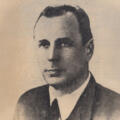
An employee of the Institute of Aviation in the years 1946–1980. A specialist in the design and construction of engines. In 1925 he graduated from a Polish school in Kaunas and enrolled at the Polytechnic School in Ghent, Belgium, where in 1929 he obtained a degree in mechanical engineering. In Poland, he began working at the Avia factory in Warsaw, where he became head of the design office and implemented production of Polish aircraft engines (licensed Wright “Whirlwind” J-5A). He designed and implemented, among other things, aircraft shock absorbers, which were installed in the PZL-37 Łoś, PZL-23 Karaś, PZL-46 Sum, and PZL-50 Jastrząb aircraft. In 1931–1932 he completed the Air Force Reserve Cadet School, and after maneuvers in 1934 and 1936, he was awarded the rank of reserve second lieutenant–observer. In 1936 he stayed in the USA, where during the purchase of licenses he gained extensive knowledge of design, research, and production organization in the aviation industry. In 1939 he was mobilized and in 1940 reached England. He served in the 315 Squadron as a tactical officer, and in 1941 he was transferred to the Royal Aeronautical Establishment in Farnborough, where he worked on jet propulsion and studied the propulsion systems of the V-1 flying bomb and V-2 rocket. He completed his service in 1945 with the rank of major (Squadron Leader) and returned to Poland on the first transport. He immediately joined the reconstruction of the Polish aviation industry and began work at the Institute of Aviation, where he designed a series of engines – from WN-1 to WN-7. A particular success was the WN-3 engine for the TS-8 Bies aircraft, which in 1957 set four world records in its class: altitude, speed, endurance, and flight distance. In the same year, he was appointed associate professor at the Institute of Aviation. For his work on the WN-3 engine, he was awarded the Gold Cross of Merit in 1956. He also worked on the second Polish helicopter, the BŻ-4 Żuk, adapting the WN-3 engine to it, and was the inventor (patent) and designer of the centrifugal mercury clutch used in this helicopter. At the same time, he worked in the Department of Aircraft Engines at the Warsaw University of Technology as an assistant professor, conducting research and supervising diploma projects, and later in the Department of Theory of Machines and Mechanisms, where he designed a variety of devices, including a propulsion unit for pontoons, a magnetic memory drum (in collaboration with Prof. Jan Oderfeld), a device for profiling and testing camshafts, an automatic machine for producing fiberboard, and devices for calibrating dynamometers. He was the author of many British and Polish patents.
Source:
1. „80 lat Instytutu Lotnictwa” J. Grzegorzewski, T. Królikiewicz, Warszawa, 2006; (out of stock)
2. Biblioteka Historyczna nr 6 „Wybrane zagadnienia z historii Instytutu Lotnictwa” T. Królikiewicz, Warszawa, 2012; (out of stock)
3. Biblioteka Historyczna nr 14 „Tytuły, stopnie i stanowiska naukowe pracowników Instytutu Lotnictwa” W. Wiśniowski, Warszawa, 2019. (on sale)
Specialist in aviation fuels, lubricants and coatings.
She worked on aviation fuels, lubricants, rubber compounds and coating materials. Under her leadership viscosity diagrams of hydraulic fluids were developed and mixtures were prepared for inflating life jackets upon contact with water. After the war she authored or co-authored numerous scientific papers on oils and coating materials. The coloured smoke trails produced by 64 Lim aircraft during the Grunwald aviation parade were created using a pigment emulsion she developed, injected into the exhaust streams of jet engines.
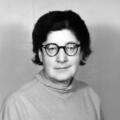
Experimental test pilot.
Employee of the Institute of Aviation from 1955 to 1998. An outstanding test pilot and flight test engineer. After obtaining his high school diploma, he began studies at the Faculty of Aviation of the Wrocław University of Technology, and after its closure, continued his education at the Warsaw University of Technology. During his studies, he earned pilot instructor qualifications. After receiving his degree in aircraft construction, he was employed in 1955 at the Flight Research Department of the Institute of Aviation and soon obtained test pilot certification. He took part in the flight test program of the CSS-13S medical aircraft and the TS-8 Bies trainer aircraft. During one of the test flights on the TS-8 Bies, aimed at examining the propulsion system, one of the propeller blades detached, causing the engine to surge, but Ludwik Natkaniec managed to land safely without damaging the rest of the prototype. He conducted Bies tests under winter conditions in Russia near Krasnoyarsk. After training on jet aircraft, he joined the flight test program of the TS-11 Iskra. Together with Andrzej Abłamowicz, he conducted flutter tests of this aircraft, and on the Il-28 flying testbed, he performed engine trials for the aircraft. He set four international records – one on the TS-8 Bies and three on the TS-11 Iskra. In the early 1970s, he conducted flight tests of the Lala-1 experimental aircraft, later performed the maiden flight of the LLM-15 experimental pre-prototype in Mielec, and then tested agricultural equipment installed on the M-15 Belfegor. The broadest scope of tests he conducted was for the I-22 Iryda jet aircraft, in which he played a key role. He participated in regular meetings addressing issues during the project and was thoroughly prepared for each flight, which allowed him to evaluate the aircraft objectively.He retired in March 1991 but continued performing test flights. He also lectured on courses for test pilots and flight test engineers. His professional activity was eventually interrupted by illness.
Source:
1. „Tu byli tu pracowali” pod redakcją dr hab. inż. Witolda Wiśniowskiego, Warszawa, 2016; (out of stock)
2. „80 lat Instytutu Lotnictwa” J. Grzegorzewski, T. Królikiewicz, Warszawa, 2006; (out of stock)
3. Biblioteka Historyczna nr 4 „Samolot szkolno-bojowy I-22 Iryda. Wymagania, realizacja, ocena” A. Baron, Warszawa, 2010; (out of stock)
4. Biblioteka Historyczna nr 11 „Polscy piloci doświadczalni” J. Jędrzejewski, Warszawa, 2014. (out of stock)
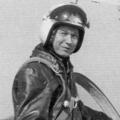
Employee of the Institute of Aviation from 1949–1952 and 1969–1988. An outstanding aircraft designer. He completed his studies at the technical faculties of AGH University of Science and Technology in Kraków, earning a Master of Engineering degree. From 1949 to 1952, he was employed at the Main Institute of Aviation, and from 1955 to 1961 at WSK-Okęcie, where he worked on the design of the PZL-102 Kos aircraft and developed the structure of the first version of the PZL-104 Wilga aircraft. He defended his doctoral dissertation at the Warsaw University of Technology in 1968. In 1969, he joined the Institute of Aviation as an assistant professor in the Strength Department, and from 1970 he served as head of the problem-solving group developing the design assumptions for a trainer-combat aircraft. From 1977 until his dismissal in 1979, he was the chief designer of the I-22 Iryda aircraft. He retired in 1988.
Source:
1. „Tu byli tu pracowali” pod redakcją dr hab. inż. Witolda Wiśniowskiego, Warszawa, 2016; (out of stock)
2. „80 lat Instytutu Lotnictwa” J. Grzegorzewski, T. Królikiewicz, Warszawa, 2006; (out of stock)
3. Biblioteka Historyczna nr 4 „Samolot szkolno-bojowy I-22 Iryda. Wymagania, realizacja, ocena” A. Baron, Warszawa, 2010; (out of stock)
Employee of the Institute of Aviation from 1962 to 1987. Specialist in avionics and electronic equipment of aircraft. He joined the Polish Army in January 1945 and served until March 1954, including assignments at WOSL Dęblin, WAT, and WSK-Warsaw II. From 1953 to 1960, he lectured at the Military University of Technology in the field of aircraft equipment. At WSK-Warsaw II, between 1960 and 1962, he organized and led the Aircraft Equipment Design Center. He began working at the Institute of Aviation in 1962. In 1963, he participated in an ICAO scholarship at the British company Smith AD, which specialized in aircraft equipment. At the Institute, he held the following positions: laboratory head (1964), head of the Onboard Instruments Department (1968), deputy head of the Measurement and Avionics Center (1974–1975), and head of the Equipment and Satellite Devices Center (1976–1987). From 1982, he was the chief designer of the “Plejada 1” project (development of avionics for the I-22 Iryda aircraft), under which the Institute of Aviation developed and implemented in production devices such as a torque meter, radio altimeter, onboard radio station, radio compass, and others. He was a member of the Institute’s Scientific Council (1974–1978). From 1988 to 1999, he served as secretary in the Institute’s Scientific Publications. He was the author of two patents and 25 publications. Awarded the Knight’s Cross of the Order of Polonia Restituta. He retired in 1987 and passed away at the age of 88.
Source:
1. „Tu byli tu pracowali” pod redakcją dr hab. inż. Witolda Wiśniowskiego, Warszawa, 2016; (out of stock)
2. „80 lat Instytutu Lotnictwa” J. Grzegorzewski, T. Królikiewicz, Warszawa, 2006; (out of stock)
3. Biblioteka Historyczna nr 4 „Samolot szkolno-bojowy I-22 Iryda. Wymagania, realizacja, ocena” A. Baron, Warszawa, 2010; (out of stock)
4. Biblioteka Historyczna nr 14 „Tytuły, stopnie i stanowiska naukowe pracowników Instytutu Lotnictwa” W. Wiśniowski, Warszawa, 2019 (on sale)
Dr Eng. Wojciech Potkański (1944–2017)
Aerodynamics and flutter testing specialist.
Deputy Director of the Institute of Aviation and Director for Scientific Affairs from 1995 to 2015. He co-created the Materials and Structures Research Centre and the Engineering Design Center at the Institute. He was also one of the principal negotiators of the agreement with General Electric on aircraft engine design and research, which led to the signing of a cooperation agreement on 17 April 2000.
Source:
1. „Tu byli tu pracowali” pod redakcją dr hab. inż. Witolda Wiśniowskiego, Warszawa, 2016; (out of stock)
2. „80 lat Instytutu Lotnictwa” J. Grzegorzewski, T. Królikiewicz, Warszawa, 2006; (out of stock)
3. Biblioteka Historyczna nr 4 „Samolot szkolno-bojowy I-22 Iryda. Wymagania, realizacja, ocena” A. Baron, Warszawa, 2010; (out of stock)
4. Biblioteka Historyczna nr 14 „Tytuły, stopnie i stanowiska naukowe pracowników Instytutu Lotnictwa” W. Wiśniowski, Warszawa, 2019 (on sale)
Grzegorz Szymanowski (1945–2016)
Specialist in industrial engines and power systems.
He served as Administrator of the Engineering Design Center Problem Group and made a significant contribution to the organisation and development of the EDC, which quadrupled the number of engineers employed there. At the Institute of Aviation he also served as Director for Infrastructure.
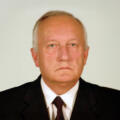
Mechanical engineer and aircraft designer.
Employee of the Institute of Aviation intermittently between 1929 and 1965, and serving as General Director from 1948 to 1952. An aircraft designer specializing in aerodynamic and structural strength calculations for aircraft. On November 11, 1918, he participated in the capture of the Mokotów Airport. After completing high school, he served in military aviation as an aircraft mechanic. In 1920, he began studies at the Warsaw University of Technology, graduating in 1931 with a degree in mechanical engineering. From 1929 to 1930, he worked at the Institute of Aviation Technology (IBTL), and then fulfilled obligations for a military scholarship in the Polish Army. From 1933 to 1935, he returned to IBTL. He subsequently worked in the aviation industry, and in 1937 returned to the Institute of Aviation (ITL), where he developed programs for static tests and verified aerodynamic and structural strength calculations. In industry, he performed strength calculations for the Żubr and Łoś aircraft and contributed to the design of the Mewa aircraft. After returning to the Institute in 1937, he drafted regulations for aircraft construction. During the occupation, from 1941, he led the Scientific-Technical Department “Dural” – a clandestine equivalent of ITL. After the war, he lectured at the Wawelberg and Rotwand School of Engineering and worked in the Ministry of Communications. From December 1, 1948, to April 30, 1952, he was Director of the Main Institute of Aviation. During the Stalinist period, he was removed from aviation for membership in the Home Army. From 1952 to 1958, he worked at the Polish Scientific Publishers (PWN). In the 1960s, he lectured at the Warsaw University of Technology, teaching the course “General Mechanics.” He then worked at ITWL in 1958–1959. From 1960 to 1965, he was Head of the Laboratory in the Strength Department of the Institute of Aviation, where he conducted calculations and flutter tests (TS-11 Iskra). From 1965 to 1969, he returned to work at PWN. He retired in 1970.
Source:
1. „Tu byli tu pracowali” pod redakcją dr hab. inż. Witolda Wiśniowskiego, Warszawa, 2016; (out of stock)
2. „80 lat Instytutu Lotnictwa” J. Grzegorzewski, T. Królikiewicz, Warszawa, 2006; (out of stock)
3. Biblioteka Historyczna nr 14 „Tytuły, stopnie i stanowiska naukowe pracowników Instytutu Lotnictwa” W. Wiśniowski, Warszawa, 2019 (on sale)
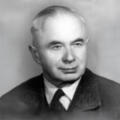
Specialist in aviation radiotechnics.
A specialist in the field of aircraft radio-technology. He earned his Master of Science in Engineering degree at the Warsaw University of Technology in 1974. From June 1974, he worked at the Institute of Aviation, where he held positions as engineer, senior assistant, section head, and laboratory manager. He conducted work on the radio-navigation equipment of the I-22 Iryda aircraft. From July 1996, he served as Scientific Secretary of the Institute; from January 2001, as Deputy Director for Technical Affairs; and from January 2006, as Director of the Infrastructure Division. He was also a member of the Presidium of the Scientific Council of the Institute of Aviation. From 2002, he actively participated in implementing the Institute’s new strategy, promoting international cooperation and the provision of scientific services. He was particularly involved in the implementation of Pratt & Whitney’s offset program, which led to the creation of the Marketing and Design Research Center. He took part in international negotiations regarding the establishment of this center and was responsible for the construction of facilities and their research equipment. He served as Secretary of the Polish Aerospace Industry Association (SPPL) and managed the SPPL office. He was also a member of the Policy Commission of the European Association of Aerospace and Defence Industries (ASD). For many years, he acted as the Institute of Aviation’s plenipotentiary for administering the scientific development of employees, leaving a lasting contribution to the development of Polish aviation and science.

Employee of the Institute of Aviation from 1953 to 1990. Specialist in flight mechanics and flight testing, aircraft designer, glider and airplane pilot. He earned his Master of Science in Engineering at the Technical Faculties of AGH University of Science and Technology (Aviation Division) in Kraków in 1949. After graduation, he began work at the Institute of Gliding (later the Glider Experimental Works – SZD) in Bielsko-Biała in the design office. He designed the experimental, tailless glider SZD-6X Nietoperz (based on a project by W. Nowakowski) and received a state team award for glider construction. He also worked on the SZD-8 Jaskółka, developed the design and construction of the SZD-9 Bocian, and designed the SZD-11 Albatros. In 1953, he joined the Institute of Aviation, where he initially worked with J. Haraźny on the design of towed targets (Spec-4) and free-flying targets. He designed a project for a competitive aircraft to the Iskra (unrealized) called As. From 1963 to 1968, he served as Deputy Director of the Institute for Scientific Affairs. From June 1968, he worked in the Flight Testing Department. In 1970, he defended his doctoral thesis at the Warsaw University of Technology titled “Load on a Glider in Towed Flight in Turbulent Atmosphere”, and in 1973 he was appointed Associate Professor. He conducted flight testing of the PZL-104 Wilga 4, re-conducted flatter tests of the TS-11 Iskra (after 500 flight hours), tested the PZL-106 Kruk (leading to the development of a new tail assembly), and performed spin tests of agricultural aircraft M-18 Dromader and M-15 Belfegor. He served as Deputy Chief Designer for the I-22 Iryda during flight tests and participated in flight testing of the I-23 Manager. He retired in 1986 but continued to work at the Institute of Aviation. His body of work includes papers presented at OSTIV conferences and published in OSTIV publications.
Source:
1. „Tu byli tu pracowali” pod redakcją dr hab. inż. Witolda Wiśniowskiego, Warszawa, 2016; (out of stock)
2. „80 lat Instytutu Lotnictwa” J. Grzegorzewski, T. Królikiewicz, Warszawa, 2006; (out of stock)
3. Biblioteka Historyczna nr 4 „Samolot szkolno-bojowy I-22 Iryda. Wymagania, realizacja, ocena” A. Baron, Warszawa, 2010; (out of stock)
4. Biblioteka Historyczna nr 14 „Tytuły, stopnie i stanowiska naukowe pracowników Instytutu Lotnictwa” W. Wiśniowski, Warszawa, 2019 (on sale)
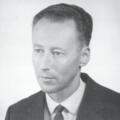
One of the most prominent Polish aircraft designers.
Employee of the Institute of Aviation from 1949 to 1955. He held the position of Director General from 1948 to 1952. Aircraft designer, specialized in aerodynamic and structural calculations for aircraft. On 11 November 1918, he participated in the capture of the Mokotów Airfield. After completing secondary school, he served in the military aviation as an aircraft mechanic. In 1920, he began studies at the Warsaw University of Technology, graduating in 1931 with a degree in mechanical engineering, specializing in aviation. From September 1935, he worked at the Aircraft Factory No. 1 PZL as a designer in the team of engineer S. Prauss. He contributed to the refinement of the PZL-23B Karaś reconnaissance-bomber and its experimental modification with a twin vertical tail, as well as to the design and production launch of the PZL-46 Sum reconnaissance-bomber. In September 1939, he was evacuated from Warsaw along with the 1st Air Regiment base. He fought in General Kleeberg’s Operational Group at Kock. He escaped captivity and during the war worked on a farm near Radom. In October 1944, he became Head of the Design and Study Office in the Civil Aviation Department of the PKWN Ministry of Communications, where he designed the single-engine aircraft Szpak-1. After the January Offensive, the office was relocated to Łódź, and in April 1945, the Aviation Experimental Workshops (LWD) were established. Sołtyk became head of the design office there and designed the Szpak-2, -3, -4A, -4T utility aircraft, the Żak-1, -2, -3, -4 sport aircraft, the Junak, Junak-2 trainer aircraft, the Miś transport aircraft, and the Żuraw liaison aircraft. These were prototypes or small series productions (5 to 10 units). From 1949 to 1950, he served as Director of LWD. After its conversion into a production plant (WSK), he was transferred to Warsaw as Chief Designer at WSK-Okęcie. However, this was a period of eliminating independent designs in favor of Soviet licenses, and Sołtyk had limited opportunities to create his own aircraft. These opportunities arose with the creation of design offices at the Institute of Aviation. Sołtyk became head of one such office, which was tasked with developing military trainer aircraft. There, he led a strong team of designers that developed the Junak-3, TS-8 Bies, and TS-11 Iskra. The preliminary design and mock-up of the TS-11 Iskra were realized at the Institute of Aviation, while the technical design was completed at WSK-Okęcie, where four prototypes were also built. At WSK-Okęcie, Professor Tadeusz Sołtyk (from 1955) became head of the OKP-1 airframe design office in the newly created Aircraft Design Center. After completing work on the TS-11 Iskra, his design office began developing an avant-garde supersonic trainer aircraft, the TS-16 Grot. A mock-up and technical design were completed; however, organizational and personnel changes in the military, combined with the political tendency under Władysław Gomułka to limit aviation production, resulted in restrictions or cessation of further work in Sołtyk’s office. Aware that the ongoing changes in the aviation industry would prevent him from continuing as an aircraft designer, he moved on 1 March 1967 to the Industrial Institute of Automation and Measurements (PIAP), where, as head of the automation team, he worked on various projects, especially automatic control systems for ship propulsion. In 1976, he was appointed Associate Professor. He retired in 1979 but continued to work at PIAP. He lectured at the Warsaw University of Technology and the Military University of Technology (WAT) and was a member of scientific councils at the Institute of Aviation, ITWL, WIML, and PIAP. In 1981, he returned to aviation activities as a consultant for PZL Warszawa-Okęcie on the construction of the PZL-130 Orlik and as a scientific consultant at the Institute of Aviation. He authored several books on aviation and an autobiography titled “Two Elements, Two Passions”, reflecting on his experiences and thoughts. He passed away in 2004. In recognition of his contributions, a modern conference hall at the Institute of Aviation, built at the turn of the 20th and 21st centuries, was named in his honor.
Source:
1. „Tu byli tu pracowali” pod redakcją dr hab. inż. Witolda Wiśniowskiego, Warszawa, 2016; (out of stock)
2. „80 lat Instytutu Lotnictwa” J. Grzegorzewski, T. Królikiewicz, Warszawa, 2006; (out of stock)
3. Biblioteka Historyczna nr 1 „Tadeusz Sołtyk – wizjoner i konstruktor polskich samolotów” pod redakcją Moniki Czech, Warszawa, 2009; (out of stock)
4. Biblioteka Historyczna nr 14 „Tytuły, stopnie i stanowiska naukowe pracowników Instytutu Lotnictwa” W. Wiśniowski, Warszawa, 2019; (on sale)
5. Autobiografia „Dwa żywioły, dwie pasje”, T. Sołtyk, Warszawa, 1997
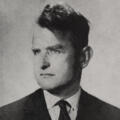
Employee of the Institute of Aviation from 1952 to 1974, aircraft designer. He began his studies at Łódź University of Technology in 1945 and obtained his diploma in 1952. During his studies, he worked at the Aviation Experimental Workshops (LWD) on the liaison-observation aircraft LWD Żuraw. In 1952, he started working in the design office at the Institute of Aviation under the direction of Tadeusz Sołtyk. He participated in the design of the following aircraft: TS-9 Junak 3, TS-7 Chwat (the unrealized Junak 2 with retractable landing gear), S-13, TS-8 Bies, and TS-10 Goniec (an unrealized liaison variant of the Bies aircraft). He was Tadeusz Sołtyk’s deputy during the design of the TS-11 Iskra, and thanks to his drawing skills, the Iskra owes much of its sleek shape to him. After the cancellation of the supersonic TS-16 Grot project, he supervised the production of the Wilga 2 in Indonesia on behalf of WSK-Okęcie. In 1970, he returned to the Institute of Aviation and, as chief designer, participated in the design of the M-15 Belfegor agricultural aircraft and the Lala-1 flying laboratory. From 1974 to 1975, he worked at the Agricultural Aviation Services Department in Egypt, and from 1975 until his retirement in 1991, he worked at PLL “Lot.”
Source:
1. „Tu byli tu pracowali” pod redakcją dr hab. inż. Witolda Wiśniowskiego, Warszawa, 2016; (out of stock)
2. „80 lat Instytutu Lotnictwa” J. Grzegorzewski, T. Królikiewicz, Warszawa, 2006; (out of stock)
Employee of the Institute of Aviation (IA) and collaborator throughout his career. He graduated from first-cycle aviation studies in 1951 at the Wawelberg and Rotwand School of Engineering, where he also worked as an assistant from 1949 to 1951. He was drafted into the Polish Army in 1950. He worked at the Military University of Technology (WAT) from 1951 to 1998. He completed his second-cycle studies at WAT in 1954, earned his PhD in 1964, and habilitation in 1973. He was appointed Associate Professor in 1978 and Full Professor in 1985. Under his supervision, 39 doctoral theses were defended. He served as supervisor or reviewer for 69 doctoral dissertations and 20 habilitations. Throughout his professional career, he specialized in internal combustion engines: aviation piston engines, traction engines, aviation gas turbines, and rocket engines. He authored or co-authored over 440 scientific and technical publications, 23 books (including a nine-volume series titled “Aircraft Propulsion Systems”), and held 27 patents and utility models. Since 1957, he collaborated with the Propulsion Department of the Institute of Aviation, several times serving on its Scientific Council. From April 1988, he was employed as a scientific consultant.
Source:
1. „Tu byli tu pracowali” pod redakcją dr hab. inż. Witolda Wiśniowskiego, Warszawa, 2016; (out of stock)
2. „80 lat Instytutu Lotnictwa” J. Grzegorzewski, T. Królikiewicz, Warszawa, 2006; (out of stock)
3. Biblioteka Historyczna nr 14 „Tytuły, stopnie i stanowiska naukowe pracowników Instytutu Lotnictwa” W. Wiśniowski, Warszawa, 2019 (out of stock)
Employee of the Institute of Aviation from 1966 to 2021, specialist in helicopter design and flight mechanics, graduate of the Faculty of Aviation at Warsaw University of Technology, obtained his PhD in 1974, habilitation in 1992, and the title of Professor of Technical Sciences in 2005. From 1961 to 1966, he worked as a designer in the aircraft prototype office at PZL-Okęcie, specializing in helicopter flight mechanics, structural optimization, simulations, and research under extreme conditions. He held positions as assistant professor from 1976, full professor from 1997, deputy director of the Institute of Aviation for scientific affairs in 1994–1995, and plenipotentiary of the director for Helicopter Technology from 1995. His key achievements include over 40 years of cooperation with the aviation industry, particularly with PZL-Świdnik S.A., active scientific and teaching work at the Institute of Aviation and universities (including Lublin University of Technology), managing the Institute’s Scientific Publications as editor-in-chief from 1995, founding and leading the Polish Rotorcraft Association as president from 1996, and national and international recognition for his scientific achievements and implementations confirmed by numerous awards, including best paper competitions and awards from the Ministry of Education and the Polish Academy of Sciences. He published over 100 scientific papers and several monographs and was a long-time member and vice-chairman of the Scientific Council of the Institute of Aviation.
Source:
1. „Tu byli tu pracowali” pod redakcją dr hab. inż. Witolda Wiśniowskiego, Warszawa, 2016; (out of stock)
2. „80 lat Instytutu Lotnictwa” J. Grzegorzewski, T. Królikiewicz, Warszawa, 2006; (out of stock)
3. Biblioteka Historyczna nr 14 „Tytuły, stopnie i stanowiska naukowe pracowników Instytutu Lotnictwa” W. Wiśniowski, Warszawa, 2019 (on sale)
Employee of the Institute of Aviation from 1970 to 1979. He was a pilot in the Polish Air Force in exile (PSP) in the United Kingdom and a test pilot. He graduated in 1939 from the Polish Air Force Officer Cadet School in Dęblin. In September 1939, he was evacuated to Romania, and subsequently to France and the United Kingdom. After training, he flew various versions of the Spitfire in the 316, 302, and 317 squadrons. He completed 298 flights, including 179 combat missions. He was awarded the Virtuti Militari Cross, the Cross of Valor four times, and the British Distinguished Flying Cross (DFC). Near the end of the war, he was seriously wounded but returned to flying. He served as the penultimate commander of the 302 Squadron. After returning to Poland, he was employed by PLL LOT and was among the pilots who, under contract, flew at the Institute of Aviation (then the Main Institute of Aviation). He made the first flights on the Pegaz motor glider and the CSS-11 aircraft. In the 1950s, following a so-called negative assessment, he was prohibited from flying. After the Stalinist period, he returned to aviation, working in various positions in air ambulance services (as technical director), flying medical aircraft, and later helicopters after retraining. He completed several thousand rescue flights. On 1 June 1972, he joined the Institute of Aviation as a test pilot. He performed various flights, including testing agricultural equipment and utility flights. He worked at the Institute until his retirement in 1979. Afterwards, he continued flying in Africa for ZUA. Jerzy Szymankiewicz passed away in Warsaw.
Source:
1. „Tu byli tu pracowali” pod redakcją dr hab. inż. Witolda Wiśniowskiego, Warszawa, 2016; (out of stock)
2. „80 lat Instytutu Lotnictwa” J. Grzegorzewski, T. Królikiewicz, Warszawa, 2006; (out of stock)
3. Biblioteka Historyczna nr 11 „Polscy piloci doświadczalni” J. Jędrzejewski, Warszawa, 2014. (out of stock)
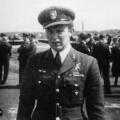
Employee of the Institute of Aviation from 1949 to 1990. An outstanding test pilot and helicopter research specialist, he was also an author, translator, and social activist. During World War II, he served in the Home Army (Armia Krajowa) and was honored as “Righteous Among the Nations.” He graduated from the Wawelberg and Rotwand Engineering School and later earned a Master of Science in Engineering at the Warsaw University of Technology in 1962. During his studies, he trained in sport flying and participated in competitions. In 1949, he began work at the Main Institute of Aviation but was arrested and dismissed due to his Home Army affiliation; he was rehired in 1955. Trained in helicopter piloting (SM-1 in Świdnik), he conducted research and certification for helicopters including SP-GIL, BŻ-4 Żuk, SM-1, SM-2, Mi-2, and the Soviet Ka-26. He piloted numerous experimental helicopter operations both in Poland and abroad. A sport pilot, he held the Gold Glider Badge with three diamonds. He was the founder and president of the SIMP Test Pilots Club, vice president of the Warsaw Senior Aviation Club, and the author of books on helicopter technology, including Introduction to Helicopter Knowledge, The History of the Helicopter, and memoirs titled Six Degrees of Freedom.
Source:
1. „Tu byli tu pracowali” pod redakcją dr hab. inż. Witolda Wiśniowskiego, Warszawa, 2016; (out of stock)
2. „80 lat Instytutu Lotnictwa” J. Grzegorzewski, T. Królikiewicz, Warszawa, 2006; (out of stock)
3. Biblioteka Historyczna nr 11 „Polscy piloci doświadczalni” J. Jędrzejewski, Warszawa, 2014; Biblioteka Historyczna nr 3 „Badania w locie w Instytucie Lotnictwa” M. Wiśniewski, R. Witkowski, Warszawa, 2010. (out of stock)
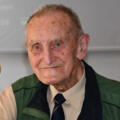
Employee of the Institute of Aviation from 1956 to 1986. An outstanding test pilot and flight test engineer, he was the only person in Poland to hold experimental pilot licenses for gliders, airplanes, and helicopters. From his youth, he was deeply interested in aviation. In 1951, he graduated from the Cracow University of Technology and began his professional career at the Glider Experimental Works in Bielsko-Biała as a designer. For one year, he also worked as an assistant at the Cracow University of Technology. In 1956, he joined the Institute of Aviation in the Flight Test Department. During the early years of his career at the Institute, he focused on training young pilots. On SM-1 helicopters, he trained ten instructors of medical aviation, and on Mi-2 helicopters, he trained 21 pilots with experimental pilot qualifications. He actively participated in experimental flights on the Mi-2 helicopter, conducting research on agricultural aviation equipment for spraying fertilizers and pesticides. At the request of the State Forests Directorate, together with pilot Ryszard Witkowski, he carried out spraying operations over parts of the Jodłowa Forest, which were being damaged at the time by the Fir Webworm.
Source:
1. „Tu byli tu pracowali” pod redakcją dr hab. inż. Witolda Wiśniowskiego, Warszawa, 2016; (out of stock)
2. „80 lat Instytutu Lotnictwa” J. Grzegorzewski, T. Królikiewicz, Warszawa, 2006; (out of stock)
3. Biblioteka Historyczna nr 11 „Polscy piloci doświadczalni” J. Jędrzejewski, Warszawa, 2014. (out of stock)
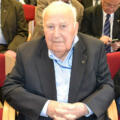
Pracownik Instytutu Lotnictwa w latach 1956-1986. Wybitny pilot doświadczalny i inżynier prób w locie, jako jedyny w Polsce posiadacz licencji pilota doświadczalnego szybowcowego, samolotowego i śmigłowcowego. Od początku swoich młodzieńczych lat był zainteresowany lotnictwem. W 1951 r. ukończył Politechnikę Krakowską i podjął pracę zawodową w Szybowcowym Zakładzie Doświadczalnym w Bielsku-Białej na stanowisku konstruktora. Przez rok pracował na Politechnice Krakowskiej jako asystent. W 1956 r. rozpoczął pracę w Instytucie Lotnictwa w Zakładzie Badań w Locie. W początkowym okresie działalności zawodowej w Instytucie Lotnictwa zajmował się szkoleniem młodych pilotów. Na śmigłowcach SM-1 wyszkolił 10-ciu instruktorów lotnictwa sanitarnego, a na Mi-2 21 pilotów z uprawnieniami pilota doświadczalnego. Aktywnie uczestniczył w eksperymentalnych lotach na śmigłowcu Mi-2 w badaniach aparatury agrolotniczej do rozpylania nawozów i środków owadobójczych. Na prośbę Dyrekcji Lasów Państwowych dokonał wraz z pilotem Ryszardem Witkowskim oprysku części Puszczy Jodłowej niszczonej wtedy przez Zwójkę Jodłową.
Źródła:
1. „Tu byli tu pracowali” pod redakcją dr hab. inż. Witolda Wiśniowskiego, Warszawa, 2016; (nakład wyczerpany)
2. „80 lat Instytutu Lotnictwa” J. Grzegorzewski, T. Królikiewicz, Warszawa, 2006; (nakład wyczerpany)
3. Biblioteka Historyczna nr 11 „Polscy piloci doświadczalni” J. Jędrzejewski, Warszawa, 2014. (nakład wyczerpany)
World-renowned expert in space propulsion technologies.
Employee of the Institute of Aviation from 1966 to 2023. He was a graduate of the Faculty of Mechanical and Power Engineering (MEiL) at Warsaw University of Technology. He earned his PhD in 1971, habilitation in 1979, and the title of professor in 1989. From 1981, he was an associate professor, from 1989 an extraordinary professor, and from 1993 a full professor at the Institute of Thermal Technology at Warsaw University of Technology. From 1992, he also served as a professor at the Institute of Aviation in Warsaw. His research focused on combustion, explosions, internal combustion engines, astrophysics, and diagnostic methods for combustion processes. He conducted grants funded by the USA, the European Union, and the British Council, and supervised student research under microgravity conditions. From 1982 until the end of his life, he headed the Department of Aircraft Engines at the Institute of Thermal Technology. He served as vice-dean of the MEiL Faculty from 1980 to 1984 and as dean from 1987 to 1990. He was a member of the Senate Commission for International Cooperation (1987–1990 and 1999–2002) and served as vice-rector of Warsaw University of Technology from 2003 to 2006. He was a member of numerous national and international scientific associations, chaired the Scientific Council of the Institute from 1999 to 2003, and was the author or co-author of four monographs and over 200 publications.
Source:
1. „Tu byli tu pracowali” pod redakcją dr hab. inż. Witolda Wiśniowskiego, Warszawa, 2016; (out of stock)
2. „80 lat Instytutu Lotnictwa” J. Grzegorzewski, T. Królikiewicz, Warszawa, 2006. (out of stock)

Employee of the Institute of Aviation from 1926 to 1971. He began his studies before World War I and during the war worked as an aircraft designer in Russia. After the war, from 1919, he worked in the Research Department of the Air Navigation Section, and later in the Air Navigation Department of the Ministry of Military Affairs. Between 1921 and 1926, he headed the strength laboratory at the Military Central Aviation Research Center, and after its transformation into the Institute of Aviation Technical Research, he became head of the technology station and later of the Aviation Technology and Materials Division (1926–1939). He worked on a wide range of problems in aviation and related fields. During World War II, he stayed in France, working in the aviation industry. Upon returning to Poland in April 1946, he joined the Technical Aviation Institute as head of the laboratory and later of the Dynamics Division. From 1947, he taught at the Warsaw University of Technology. In 1948, he defended his doctoral dissertation, and in 1955 he received the title of professor. In 1960, he retired from academia but continued working at the Institute part-time and later as a consultant until 1971. At the Institute, he developed various research projects and facilities, including studies on fatigue of SM-1 helicopter blades and a weighing system for the T-3 wind tunnel.
Source:
1. „Tu byli tu pracowali” pod redakcją dr hab. inż. Witolda Wiśniowskiego, Warszawa, 2016; (out of stock)
2. „80 lat Instytutu Lotnictwa” J. Grzegorzewski, T. Królikiewicz, Warszawa, 2006. (out of stock)
3. Biblioteka Historyczna nr 14 „Tytuły, stopnie i stanowiska naukowe pracowników Instytutu Lotnictwa” W. Wiśniowski, Warszawa, 2019.
Employee of the Institute of Aviation from 1946 to 1968. Specialist in the design and construction of pulsejet, jet, and rocket engines. In 1946, he graduated from Łódź University of Technology with a degree in mechanical engineering. In the same year, he began working at the Technical Aviation Institute (later the Institute of Aviation) as head of a department and then as head of the Non-Compressing Engines Division. He focused on combustion in pulsejet, jet, and rocket engines. While working at the Institute, he completed his doctoral thesis and was employed as an assistant at Warsaw University of Technology in the Department of Thermodynamics. Under his supervision, several pulsejet and jet engines were developed, including engines for the experimental Trzmiel helicopter, and he worked on rocket technology projects, including the guided anti-tank missile Diament. In 1964, he was appointed associate professor at Warsaw University of Technology. He published several articles and books, including Principles of Experiment and Combustion. He served multiple terms as chairman of the Scientific Council of the Institute of Aviation. In September 1968, he left the Institute of Aviation and worked for many years as a consultant. In the early 1980s, he moved to the United States, where he taught at Washington State University in Pullman, WA until his retirement.
Source:
1. „Tu byli tu pracowali” pod redakcją dr hab. inż. Witolda Wiśniowskiego, Warszawa, 2016; (out of stock)
2. „80 lat Instytutu Lotnictwa” J. Grzegorzewski, T. Królikiewicz, Warszawa, 2006; (out of stock)
3. Biblioteka Historyczna nr 14 „Tytuły, stopnie i stanowiska naukowe pracowników Instytutu Lotnictwa” W. Wiśniowski, Warszawa, 2019. (on sale)
Employee of the Institute of Aviation from 1953 to 1998. Test pilot and specialist in flight testing of aircraft. During World War II, he served in the Home Army (Armia Krajowa) and participated in the Warsaw Uprising as part of the AK Krybar unit, where he was wounded. After the uprising, he was held in a prisoner-of-war camp and later in a military camp for minors. After returning to Poland, he completed his secondary education and studied at Warsaw University of Technology, earning an engineering degree in 1953. That same year, he joined the Institute of Aviation in the Flight Research Department. He obtained his flight instructor license at the Warsaw Aero Club in 1956 and his test pilot qualifications in 1958. He was a long-time head of the Aircraft Testing Laboratory and was seconded to Egypt. Upon returning, he participated in flight testing of agricultural aircraft including the Lala-1, PZL-106 Kruk, and M-15. After training in the USSR on the Yak-40 aircraft, he helped adapt it for testing the K-15 engine and later conducted K-15 engine trials on this aircraft. In 1974, he earned his PhD at Wrocław University of Technology. For many years, he taught courses for test pilots. He authored two books in the Institute of Aviation Scientific Library series on test pilot training and one in the Institute of Aviation Historical Library series titled “Study of the Liberator AL-523 Gibraltar 1943 Disaster”. He retired in 1998.
Source:
1. „Tu byli tu pracowali” pod redakcją dr hab. inż. Witolda Wiśniowskiego, Warszawa, 2016; (out of stock)
2. „80 lat Instytutu Lotnictwa” J. Grzegorzewski, T. Królikiewicz, Warszawa, 2006; (out of stock)
3. Biblioteka Historyczna nr 11 „Polscy piloci doświadczalni” J. Jędrzejewski, Warszawa, 2014. (out of stock)
Aviation engineer and aircraft designer.
Employee of the Institute of Aviation from 1930 to 1981. An outstanding aircraft and helicopter designer. While still a student, he began working in the design office of the Experimental Aviation Workshops, where the RWD aircraft originated. His first task was designing several components for the modified RWD-14 liaison-observation aircraft. Next, he developed the design and performed calculations (based on a sketch by Eng. Stanisław Rogalski) for the training-acrobatic RWD-17 aircraft, whose structural layout was similar to that of the RWD-8; after flight tests, 25 units were built. He then modified the RWD-13 into the RWD-13S ambulance aircraft, producing 15 units by September 1939. In the fall of 1937, he designed Poland’s first experimental tricycle landing gear for the RWD-9 prototype. He also designed the floatplane version of the RWD-17, the RWD-17W, which was flown in June 1938, and by September 1939 five units were built for the Navy, which did not take delivery. For the RWD-17, he designed a new wing in the winter of 1938–1939 to improve the aircraft’s performance in fast aerobatic maneuvers; it was to enter production as the RWD-17bis in the fall of 1939. During World War II, he stayed in Warsaw, joining the Home Army in November 1942; he was wounded during the Warsaw Uprising and evacuated. He returned in 1946 and worked in the Aviation Department of the Polish Scouting and Guiding Association (ZHP). He collaborated with Eng. Tadeusz Chyliński on the design of the Pegaz motor glider, piloting its first flight. At the Institute of Aviation, he undertook the development of the SP-GIL helicopter, significantly influencing the project; its successful flights earned him the 2nd Class State Award in 1953. His studies on new helicopters in 1952–1953 led to the definition of requirements for the multi-role BŻ-4 helicopter and the creation of a helicopter design office under his leadership at the Institute. Prototypes were built and tested, with tests continuing after the design office moved to WSK Okęcie. Difficulties with the propulsion system and the lifting structure delayed flight testing, and the BŻ-4 first flew in February 1959; meanwhile, licensed production of the SM-1 helicopter began in Świdnik, and work on the BŻ-4 was discontinued. After the helicopter design office at WSK-Okęcie was closed, he worked in the aircraft design offices of the same factory. Together with M.Sc. Eng. Andrzej Frydrychewicz, he developed the multi-role PZL-104 Wilga 2 and its subsequent variants, Wilga 3 and Wilga 35. Due to the phase-out of aircraft production at WSK-Okęcie and the reassignment of aviation designers, he returned to the Institute of Aviation in April 1970. From 1970 to 1976, he served as chief designer for helicopters, contributing to the tactical-technical requirements of the W-3 Sokół and participating in the preliminary design at PZL-Świdnik. After retirement, he continued to work at the Institute in the Flight Test Department, focusing on helicopter technology. Bronisław Żurakowski’s design legacy encompasses 12 types of flying machines in which he participated, with a total production of 1,200 units.
Source:
1. „Tu byli tu pracowali” pod redakcją dr hab. inż. Witolda Wiśniowskiego, Warszawa, 2016; (out of stock)
2. „80 lat Instytutu Lotnictwa” J. Grzegorzewski, T. Królikiewicz, Warszawa, 2006; (out of stock)
3. Biblioteka Historyczna nr 11 „Polscy piloci doświadczalni” J. Jędrzejewski, Warszawa, 2014. (out of stock)